I’m working to update the layout that I posted early on, to position more ideas for content and maybe introduce new base colours. It’s proving more difficult than I expected. The more I wander up and down Dulwich Road, the more complete that early polarised colour palette seems to be – greens in privet hedges and the park, yellows, browns and oranges of the brickwork, then hard red for the buses, bright white stucco and the zebra black-white of the crossings. I want all of these, but I feel a bit hemmed in by the orange, yellow, green and red base colours of that first layout. I’d thought they would be the start of a wider range. But I guess I should to give in to it; accept that an urban environment is brutal, and make use of shades to introduce some nuance.
Brickwork
I’ve been resisting featuring too much yellow-orange brickwork, but it’s an overwhelming presence. So, while I don’t want it to dominate, I think it’s right to include more.
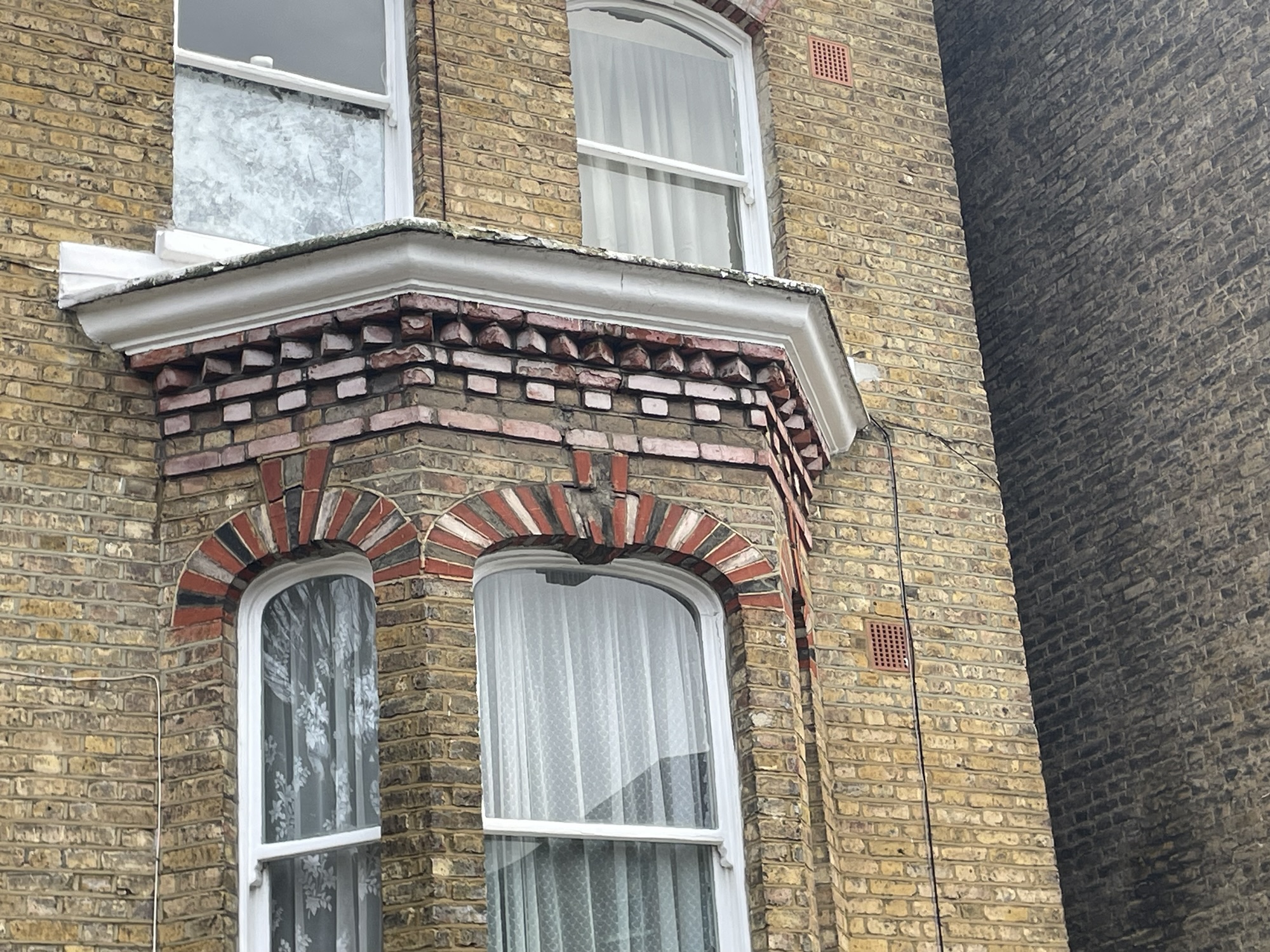
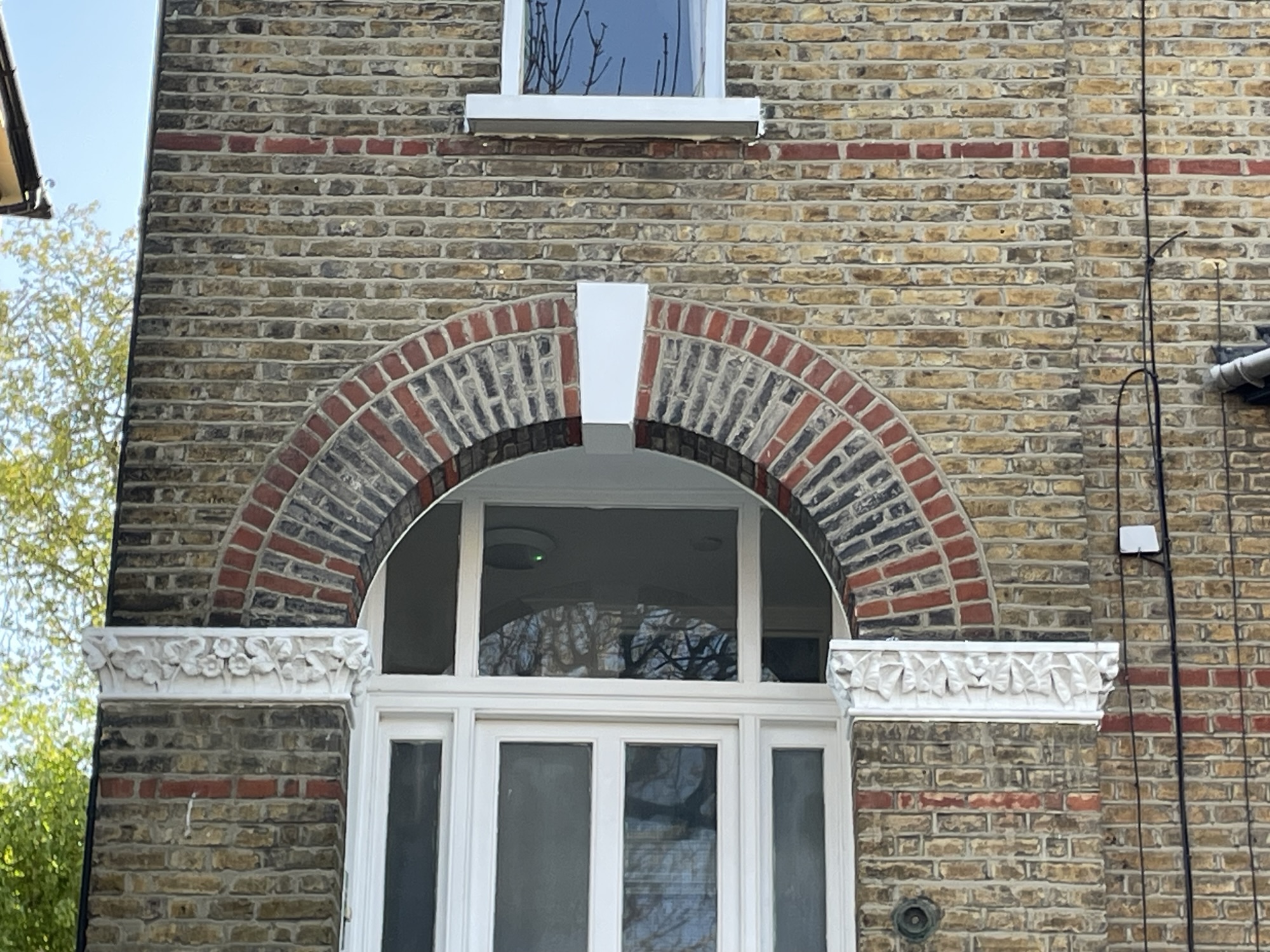
The area was developed at speed and with serious enthusiasm in the second half of the 19th century after Herne Hill got its own station in 1862, so it’s not surprising that there is a consistent feel to the brickwork. And those Victorians knew how to pretty it up. Here are just a few examples.
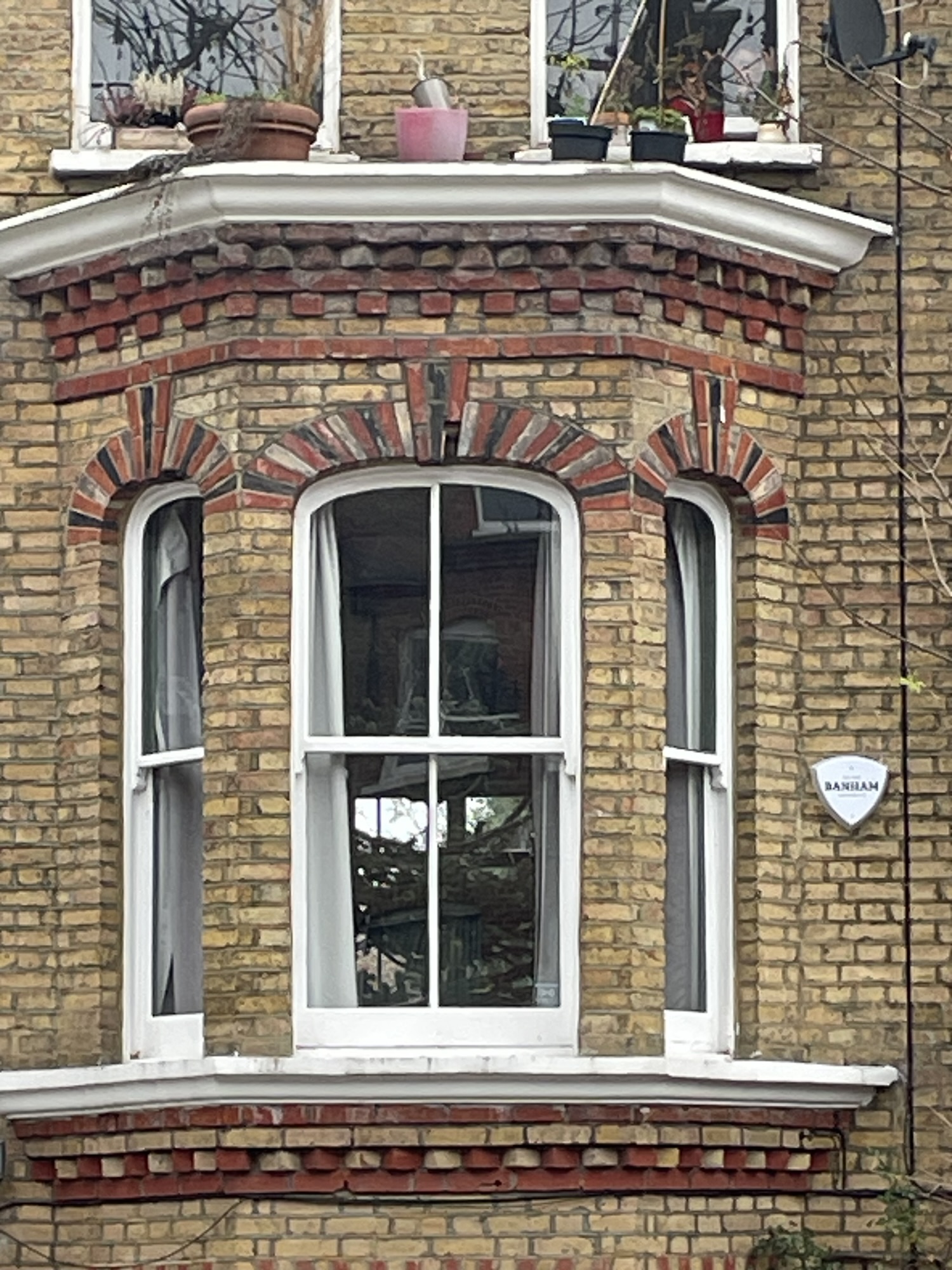
The feature below is in the garden wall of no. 9, which was the lifelong home of two brothers from their wartime childhood into the 2020s.
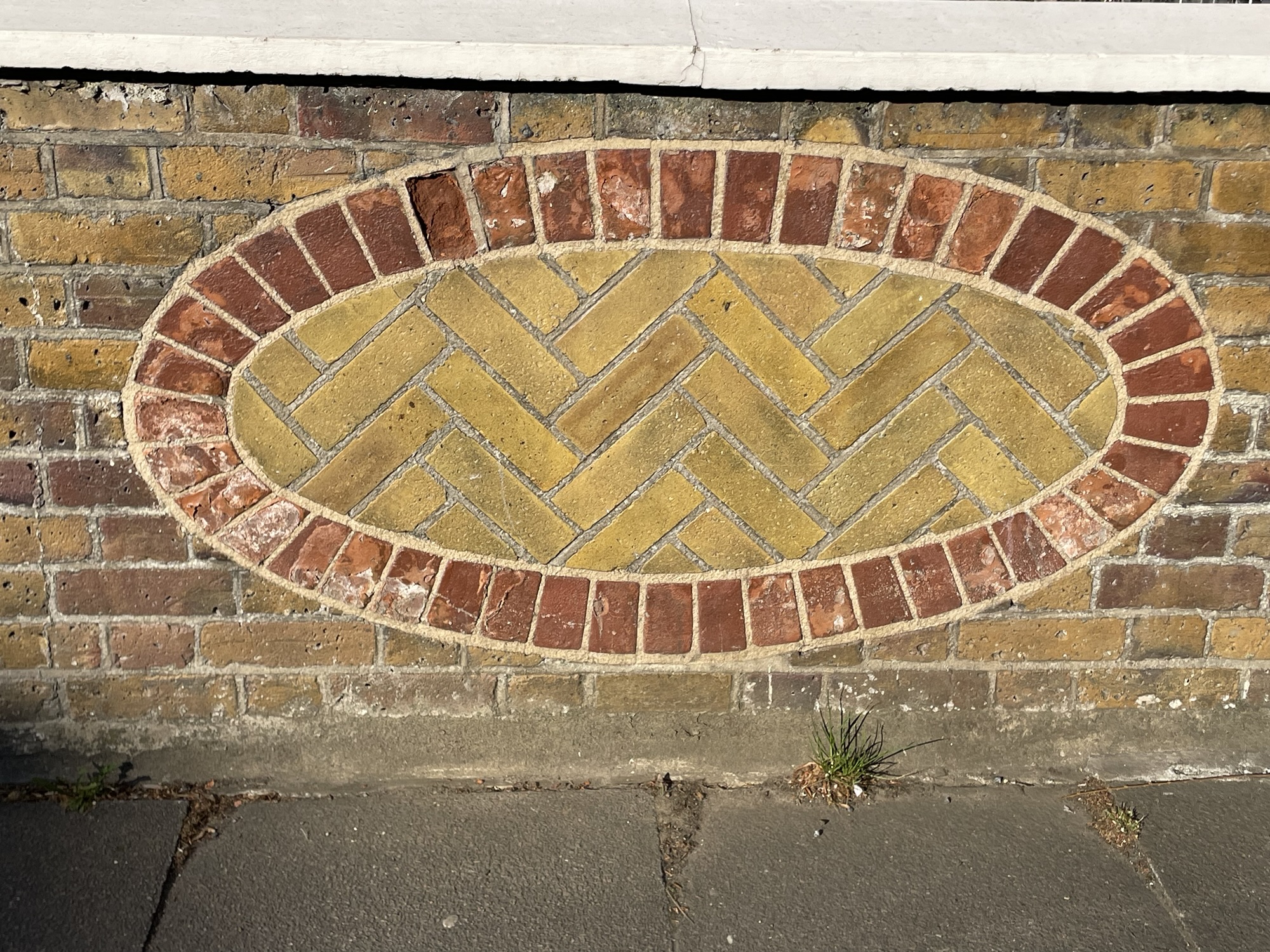
The brothers are gone now, but their upkeep of the house exterior was meticulous and this feature looks like something they will have added themselves. Its inclusion would be a little nod to the many for whom Dulwich Road is home through long lives.
The Prince Regent pub has distinctive brickwork. It could be included, although I don’t see much potential for knitting that I’d enjoy.
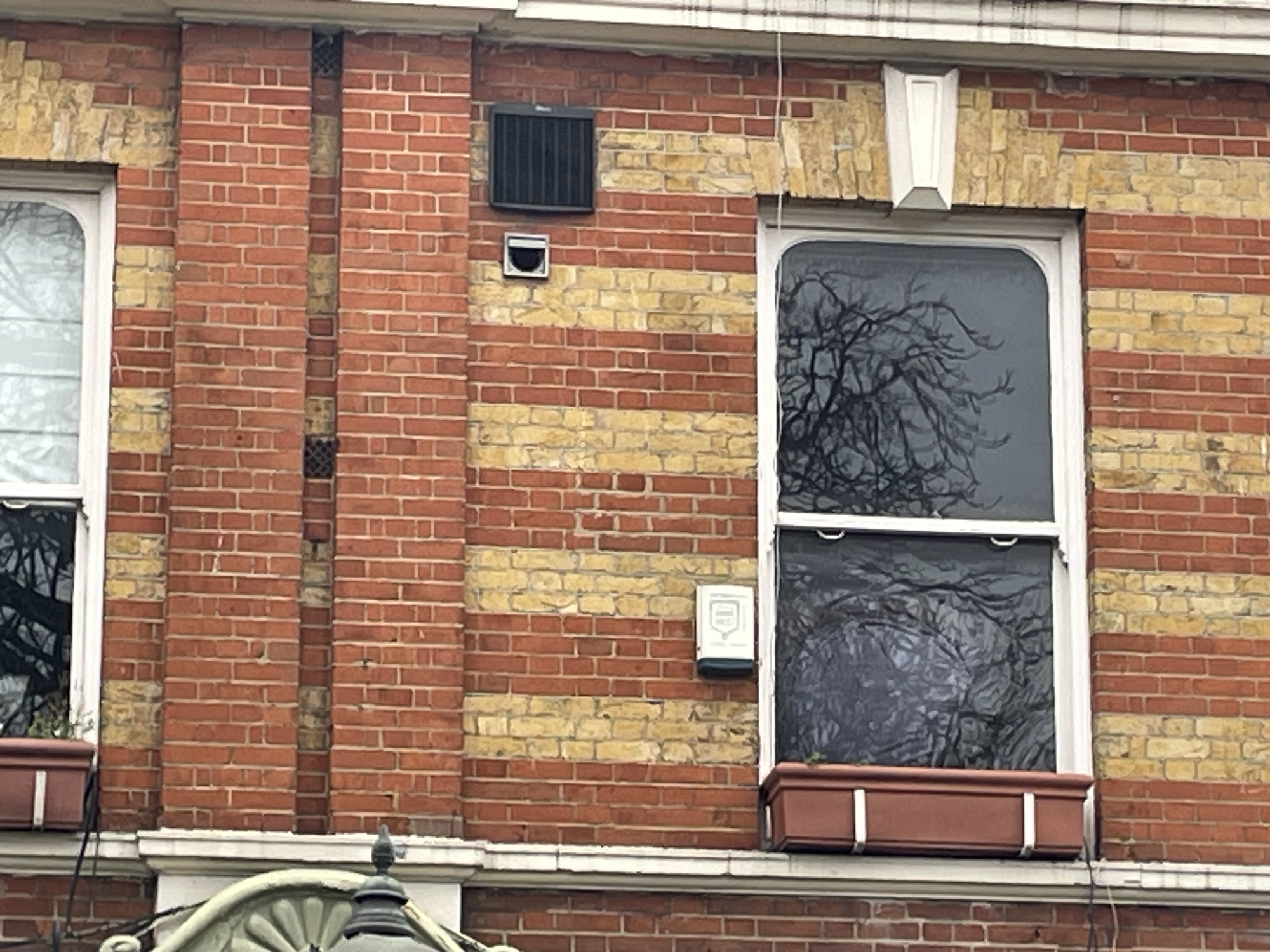
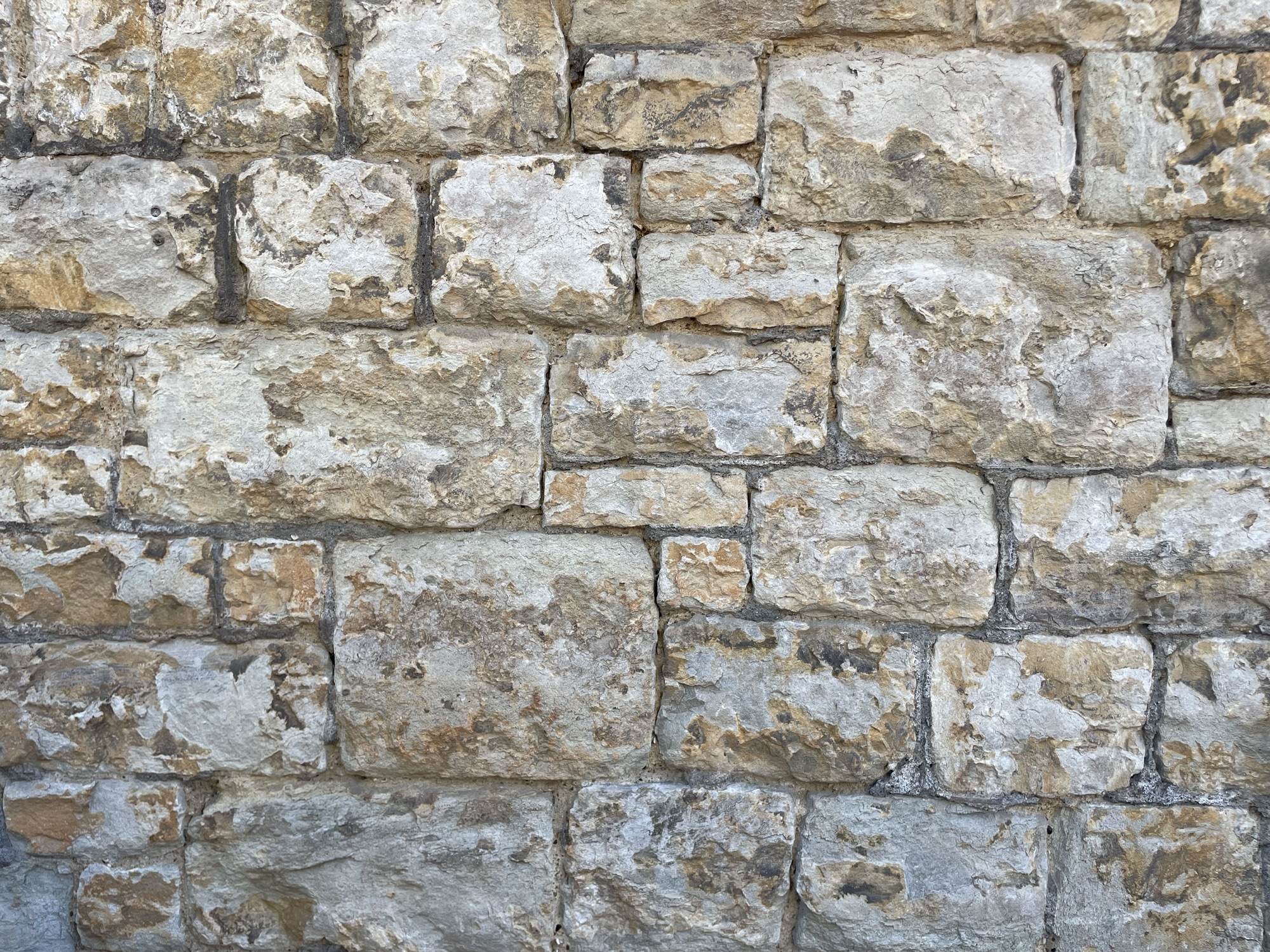
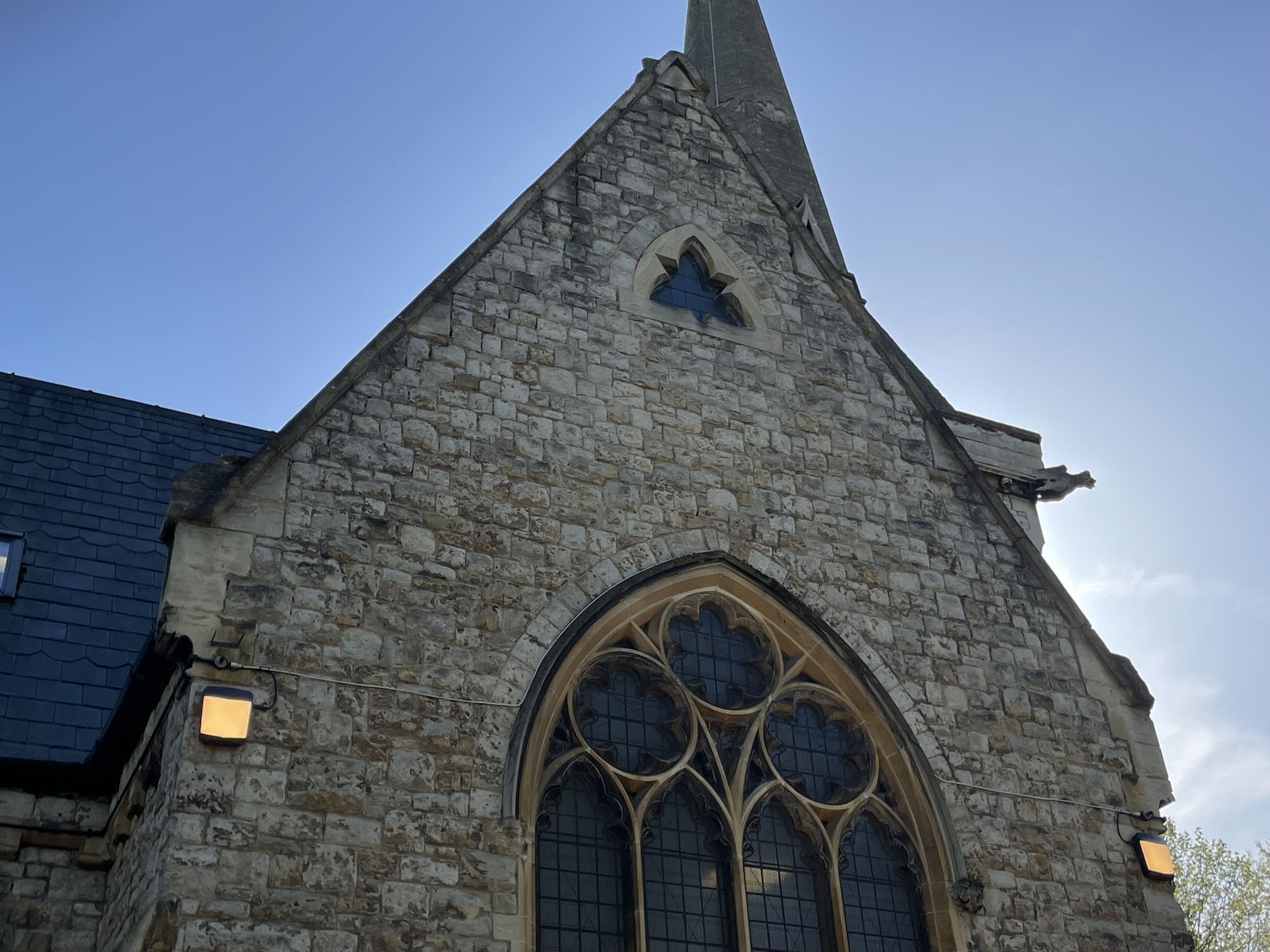
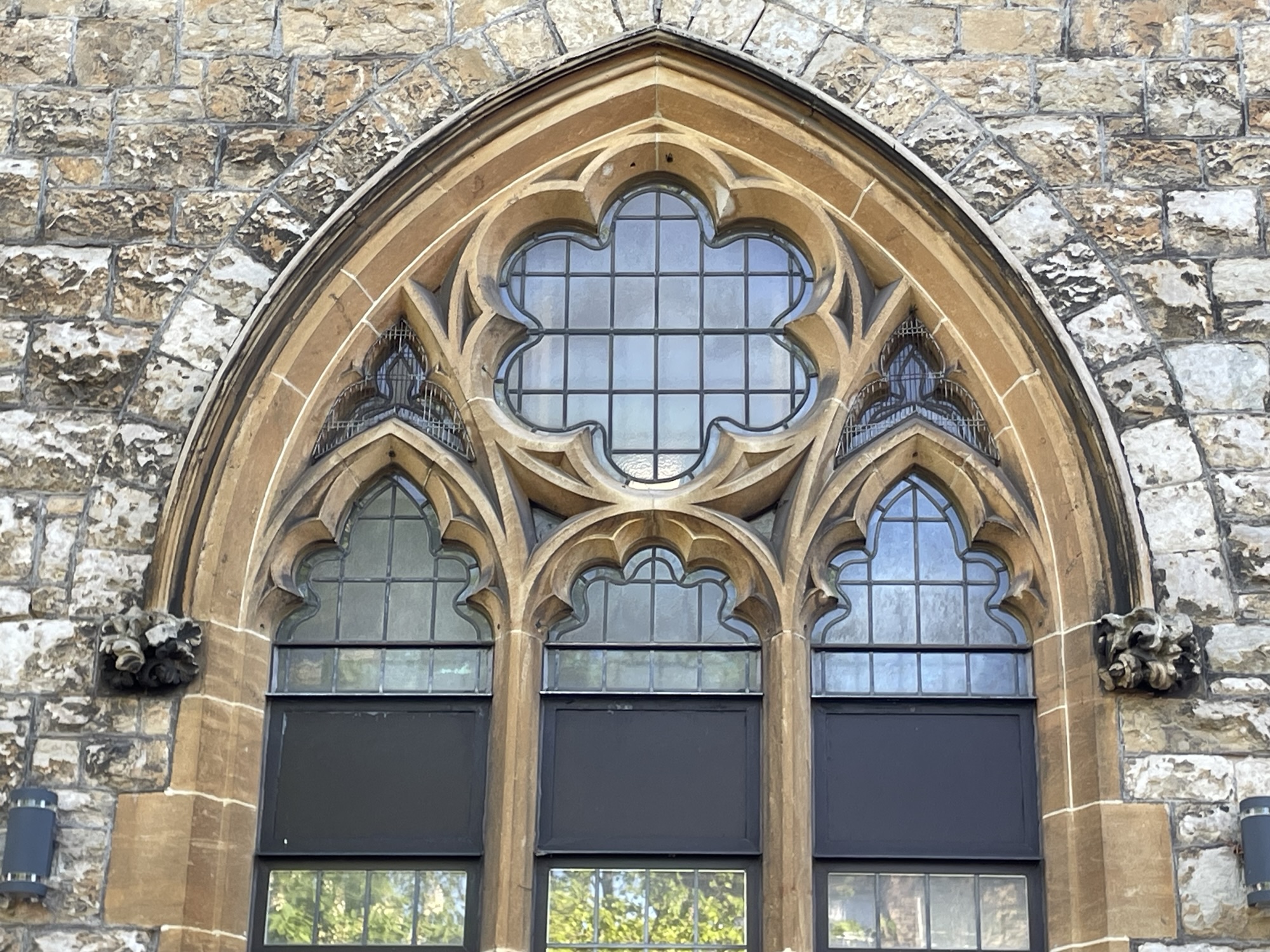
However, the brickwork of St Jude’s Church (built late 1860s) would be fun to knit so I will include it as well as the window embellishments I already had in mind. It’s also a lovely calm colour. The building has been beautifully maintained since God moved out decades ago, replaced by an office furniture warehouse when we first arrived in the area, and now a magazine publisher.
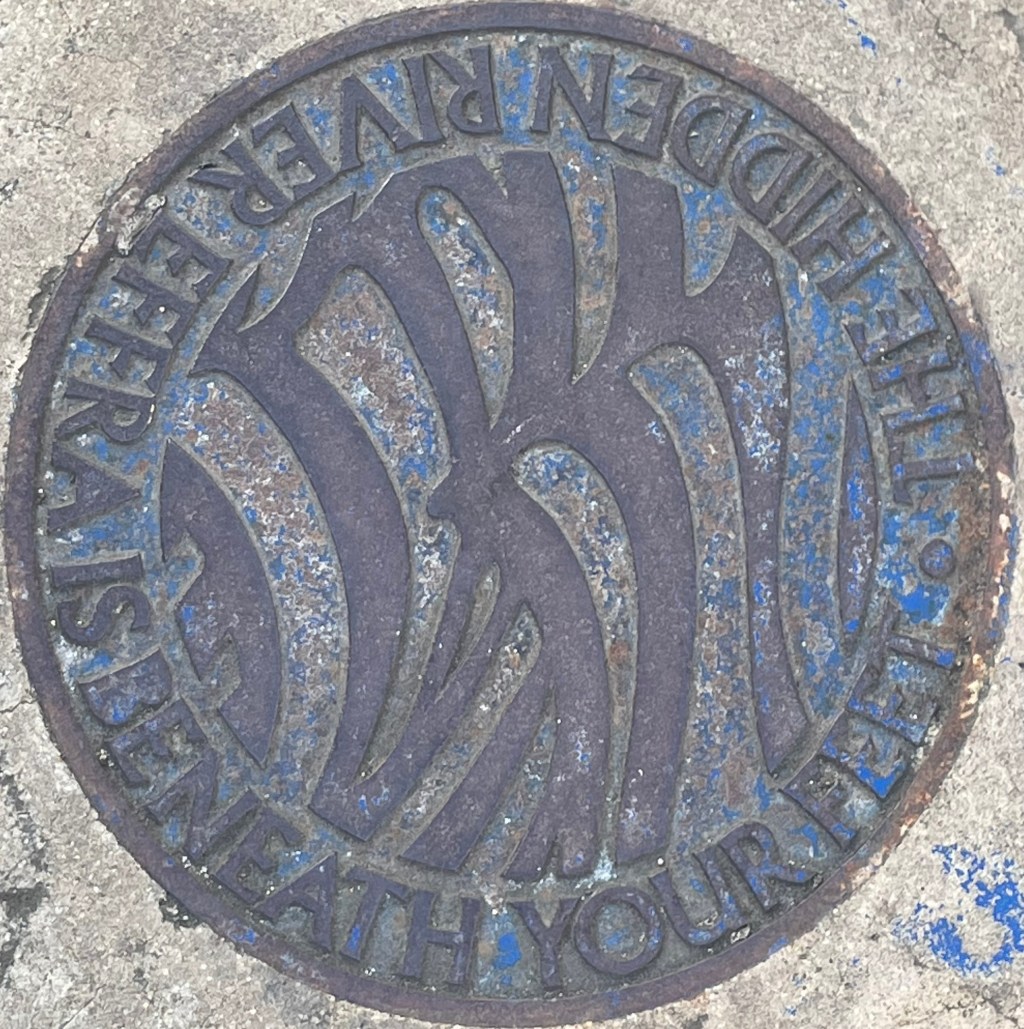
The Hidden River Effra
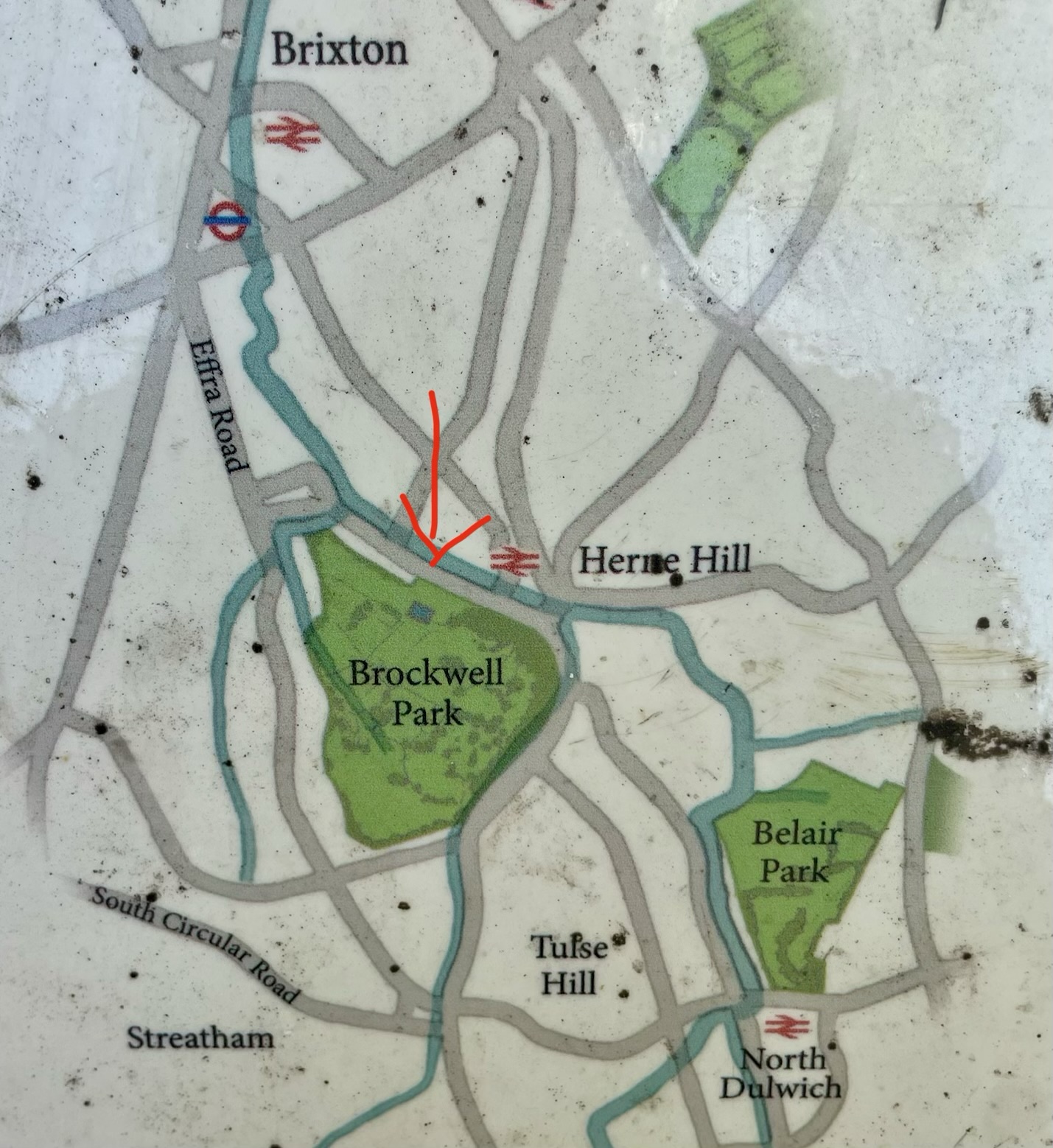
Next to each of the two stink pipes – What’s in a Square? (2) – there is a plaque set in concrete in the ground, bearing the legend ‘The hidden River Effra is beneath your feet’. The map below appears in an explainer panel nearby on the roadside, and shows how the Effra flowed all along Dulwich Road before it was sunk into the Victorian sewers. Badly drawn arrow is all my own work.
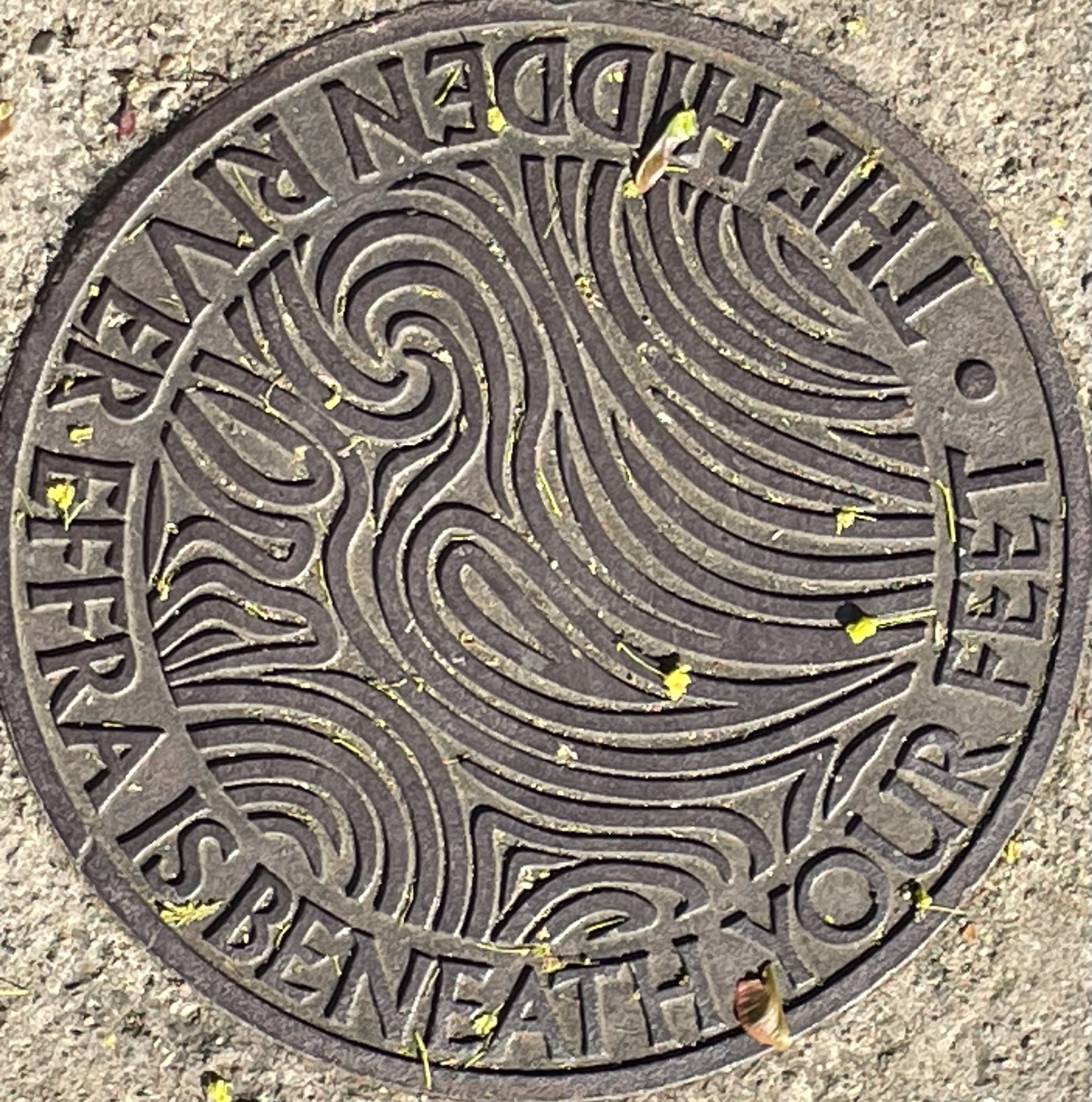
I’ve been looking for ways to introduce blue as a base colour into the blanket, so I will use blue yarn for the water imagery in the two plaques rather than gunmetal grey. As it happens, someone painted one of them blue a couple of years ago, so it’s not completely made up. You can see the vestige of it in the main image at the top of this post.
The shops
Returning to these (see What’s in a Square? (2))
I’m struggling to work out how to include them, and think some kind of direct representation is the only way. Perhaps a couple of squares might replicate a number of logos? But could be cartoonesque. And beyond my skill set, hence a car crash. And also, with the iconic intarsia (What’s in a square?), there may be just too many ‘pictures’ in the blanket.
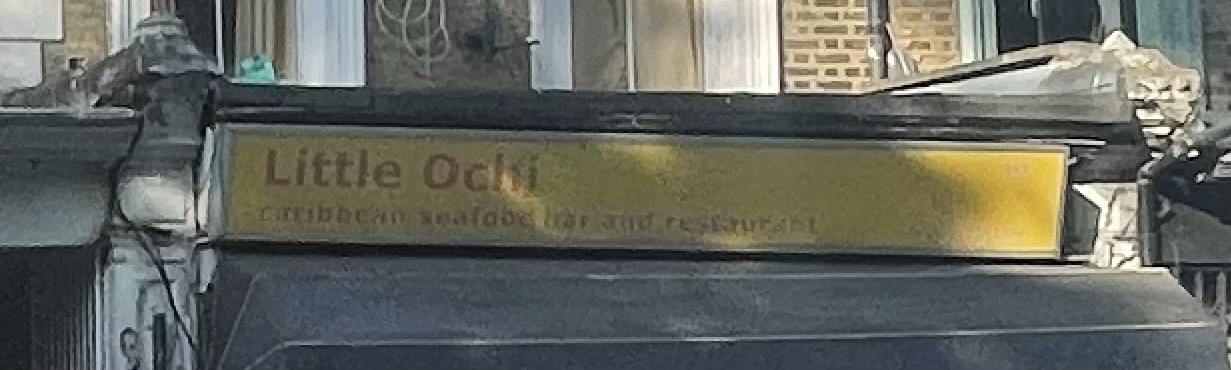
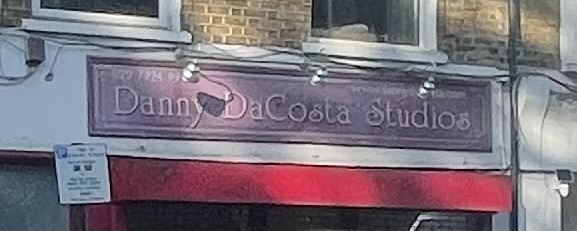
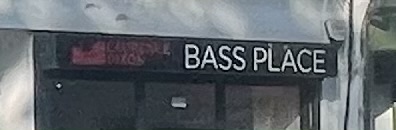
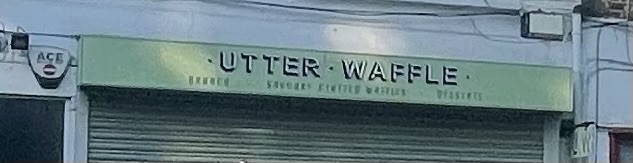

Another option is to indicate a strip of shops. But how?
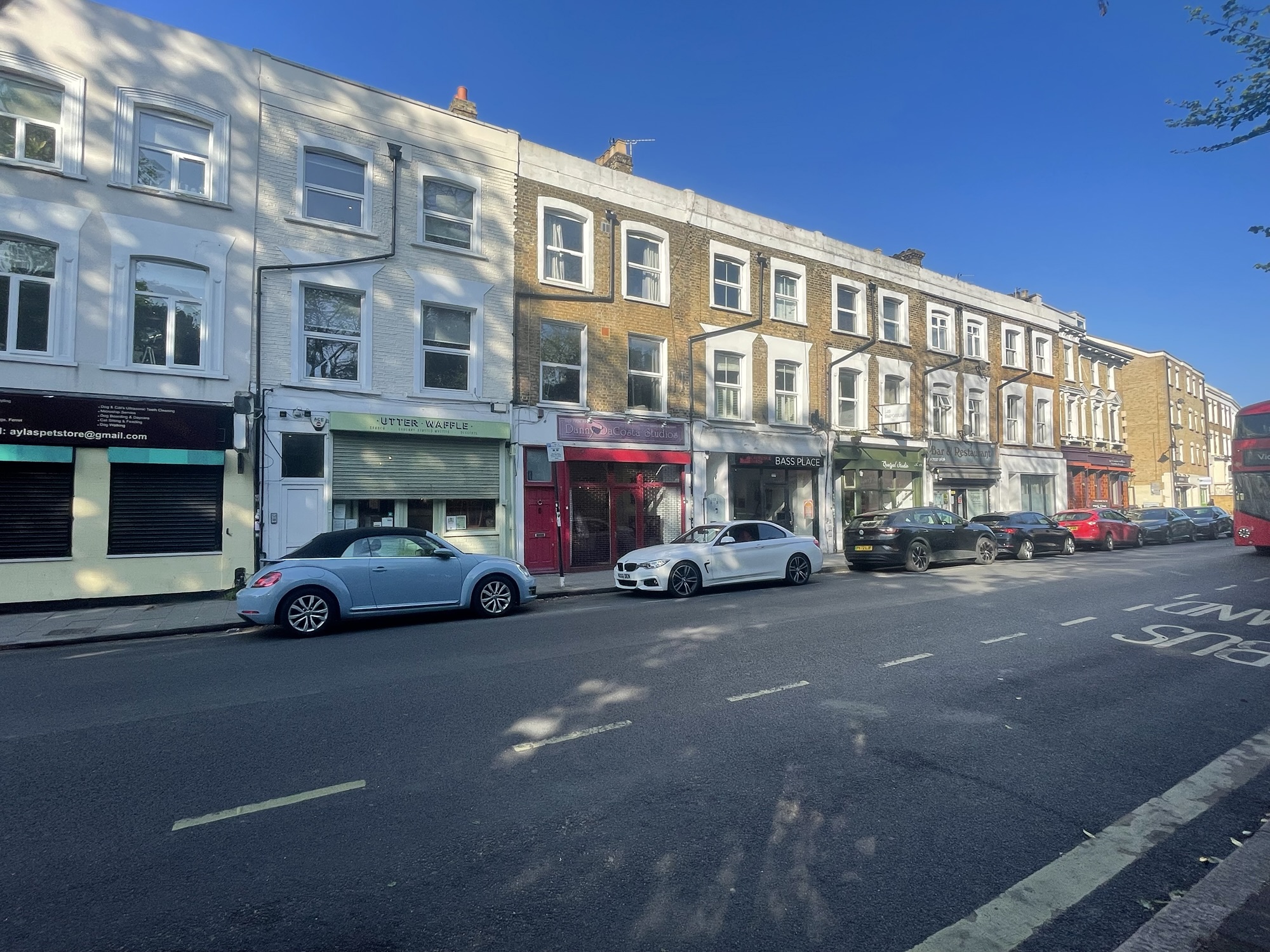
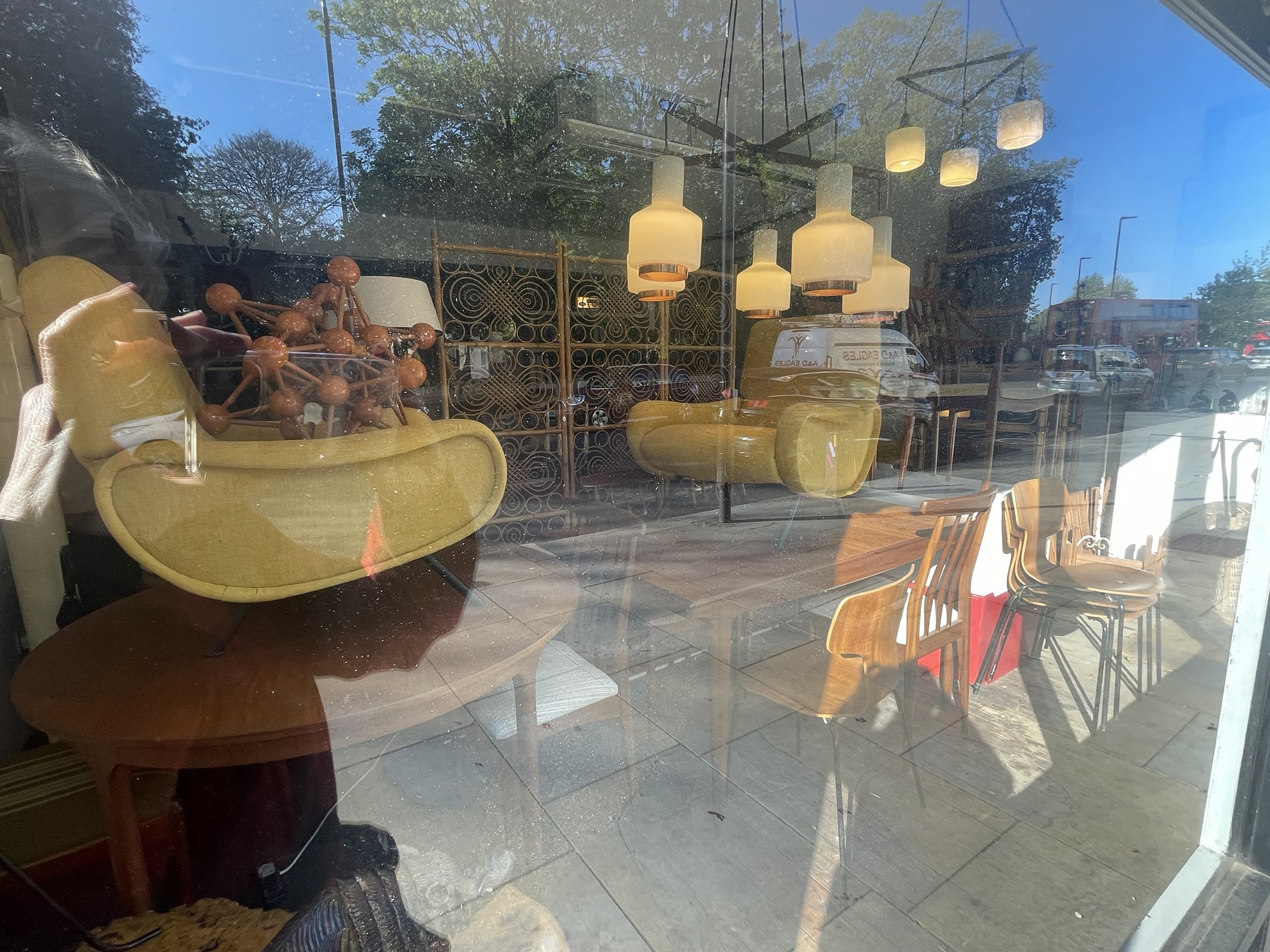
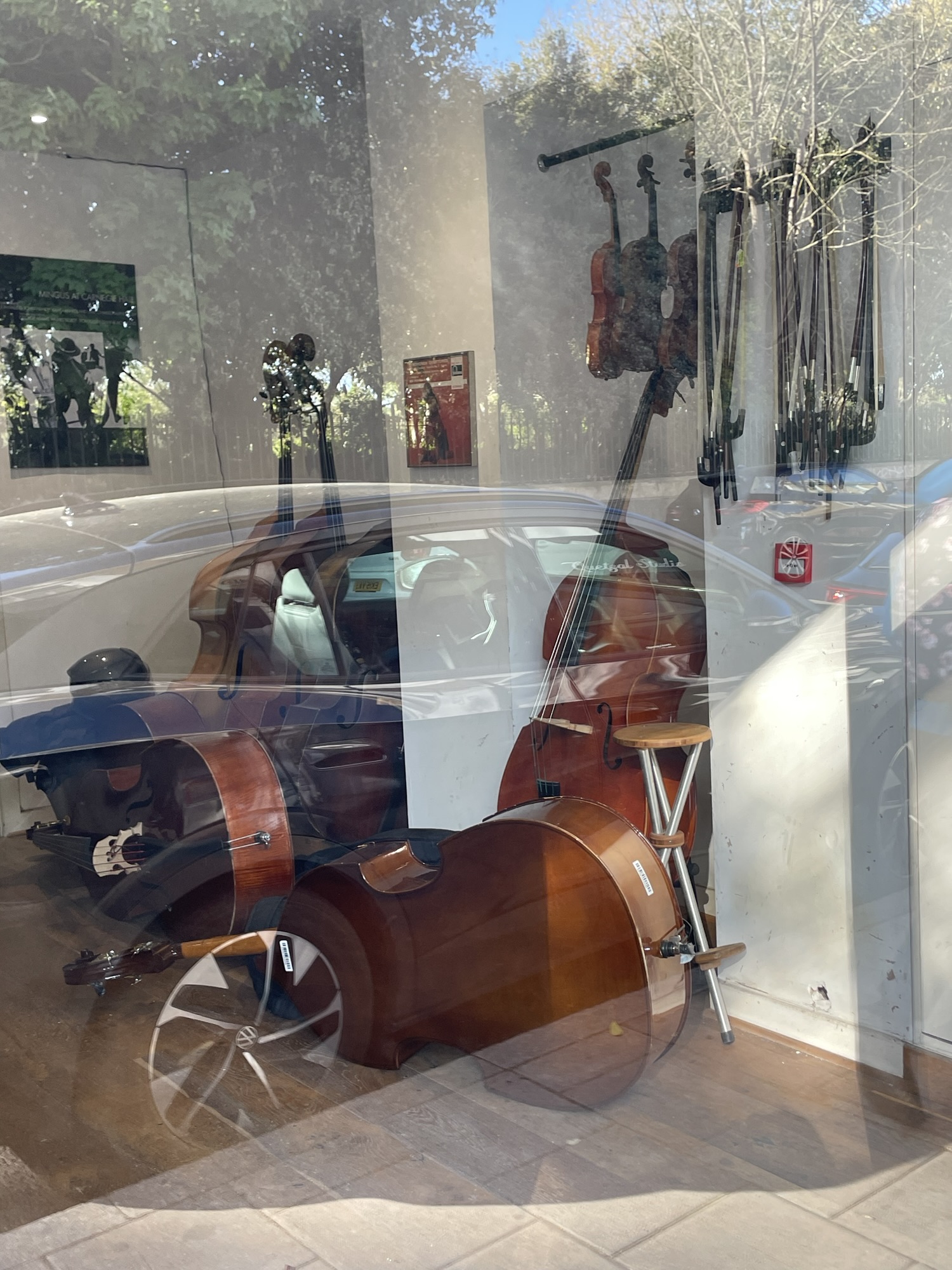
Or I might communicate aspects of trade: the mid-century modern furniture at Morbleu, the instrument care and rescue at Bass Place. But, again, how?!!
Horse chestnuts
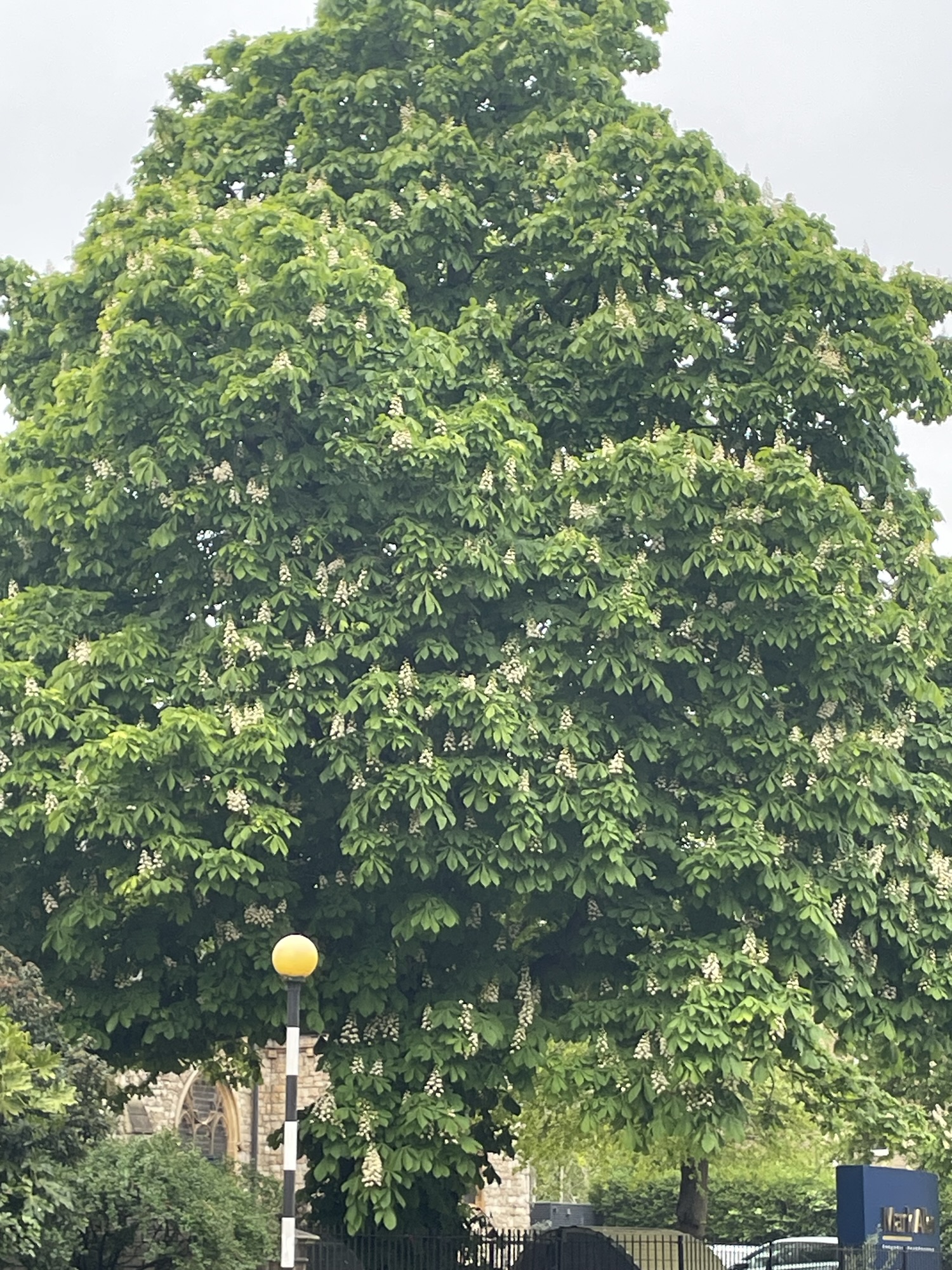
As I lean into the idea of including more yellow-orange brickwork, I’m going to do the same for greenery, and I’d like to embrace the vast horse chestnuts standing in front of St Jude’s Church, because I fear their days could be numbered. They are in glorious, healthy bloom right now, but like so many of these trees that dominate the British landscape, their leaves now brown too early towards the end of summer due to disease or infestation. Three were removed from outside Brockwell Lido a few years ago, although the loss may not have been due to disease. Even so, I worry the St Jude’s trees will disappear, as well as the remaining four at the Lido.


Leave a Reply